
How to Find and Evaluate an Assisted Living or Memory Care Facility

To find and evaluate an assisted living or memory care facility, start by evaluating your loved one’s care needs, then search state licensing directories or platforms like Caring.com and A Place for Mom. Visit facilities in person to check safety features, staff-to-resident ratios, and cleanliness. Memory care typically costs 15–25% more than assisted living, with payment options including Medicaid and veterans benefits. There’s much more to reflect on before making your final decision.
Key Takeaways
- Assess your loved one’s care needs by observing warning signs like poor hygiene, weight loss, and missed medications before selecting a facility type.
- Use online platforms like Caring.com, A Place for Mom, or state health department directories to find licensed memory care or assisted living facilities.
- During facility visits, observe staff interactions, cleanliness, resident engagement, and safety features like handrails, nonslip flooring, and secure outdoor spaces.
- Ask facilities about staff-to-resident ratios, dementia care training, individual care plan development, monthly fees, and price increase policies.
- Review state inspection reports for unresolved violations, high staff turnover, and complaints, as these are major red flags indicating poor care quality.
Memory Care vs. Assisted Living: What’s the Difference?
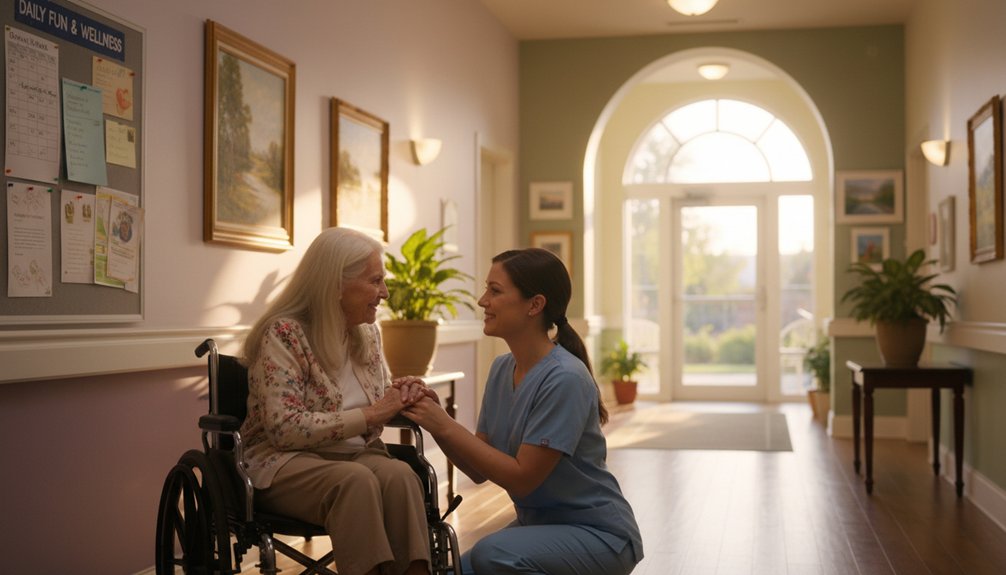
When searching for senior care, you’ll likely encounter two common options: assisted living and memory care. Understanding the differences helps you choose the right fit for your loved one.
Assisted living supports seniors who are mentally alert or mildly impaired but need help with daily tasks like bathing, dressing, and medication management. Residents maintain relative independence and enjoy social activities, outings, and fitness programs in open, accessible settings.
Memory care serves individuals with Alzheimer’s, dementia, or significant cognitive decline. It provides 24/7 specialized oversight, structured routines, and secured environments with locked exits and motion detectors to prevent wandering. Staff receive advanced dementia training and manage behaviors like confusion and aggression with compassion and skill. This care model emphasizes personalized care plans to enhance the quality of life for residents.
Activities in memory care focus on cognitive stimulation through music therapy, reminiscence, and sensory exercises. Because of higher staffing ratios and specialized resources, memory care typically costs more than assisted living. Some memory care programs utilize Dementia Capable Care™ to emphasize residents’ dignity and autonomy throughout their treatment.
How to Assess Your Loved One’s Care Needs
How do you know when it’s time to seek professional care for your loved one? Watch for key warning signs: changes in hygiene, unexplained weight loss, missed medications, unpaid bills, or withdrawal from friends and family. These signals often indicate physical or cognitive challenges that require professional support.
A formal assessment, typically conducted by a nurse or admissions staff, evaluates your loved one’s ability to perform daily activities like bathing, dressing, feeding, and transferring in and out of bed. It also covers mobility needs, medication management, mental awareness, and existing health conditions like diabetes or dementia. Facilities that specialize in memory care often have tailored programs that can address these specific needs.
To prepare, gather medical records, current medications, and your observations of daily challenges. Note your loved one’s preferences for activities and social interaction. Bringing a family member or caregiver to the assessment helps fill information gaps and guarantees a more accurate, personalized care plan. After the initial assessment, periodic reassessments ensure that your loved one’s care plan evolves alongside any changes in their health or daily needs.
Where to Find Licensed Memory Care Facilities

Finding a licensed memory care facility in Brooklyn starts with knowing where to look. The New York State Department of Health licenses and oversees all residential adult care facilities, and the NYS Health Profiles directory lists 164+ licensed options organized by provider type and county.
Online platforms make searching easier. Caring.com lists 100 memory care communities in Brooklyn with nearly 2,800 authentic reviews and an average rating of 4.0 out of 5 stars. A Place for Mom covers facilities across Brooklyn’s diverse neighborhoods, from Sheepshead Bay to brownstone communities, and lets you filter by location, services, and amenities. When searching, prioritize facilities that provide specialized care tailored to dementia patients to ensure the best support for your loved one.
Community organizations offer additional guidance. CaringKind provides in-person consultations with dementia specialists at (646) 744-2900, while the Alzheimer’s Association New York City offers support through (800) 272-3900. The New York Memory Center in Brooklyn directly serves families traversing middle- to later-stage Alzheimer’s disease at (718) 499-7701. Some Brooklyn Heights facilities, such as Seagate Rehabilitation and Nursing Center, participate in Medicaid programs and can be contacted directly to schedule tours and obtain insurance information.
What Memory Care Actually Costs and How to Pay for It
Understanding memory care costs requires looking at a few key numbers. Memory care typically runs 15–25% more than standard assisted living, which already averages between $5,371 and $8,399 monthly depending on your source and location. That means you could realistically budget $6,200 to over $10,000 monthly for memory care.
Location matters greatly. States like Utah and Georgia offer lower medians near $5,000, while Vermont and North Dakota exceed $10,000. Urban facilities often cost $2,500 more monthly than rural ones. Many facilities also offer essential services such as recreational programs and social activities that can enhance quality of life for residents.
Most facilities include housing, meals, 24-hour supervision, safety features, and dementia therapies. Some use all-inclusive pricing, while others add fees as care needs increase.
For payment, Medicaid covers qualifying individuals, though typically for shared rooms only. Medicare covers only specific short-term situations. Long-term care insurance and personal savings remain common options. Veterans benefits and other public programs may also help reduce out-of-pocket costs for eligible families. Planning early gives your loved one the best chance of accessing quality care.
How to Check a Facility’s Licensing and Ratings
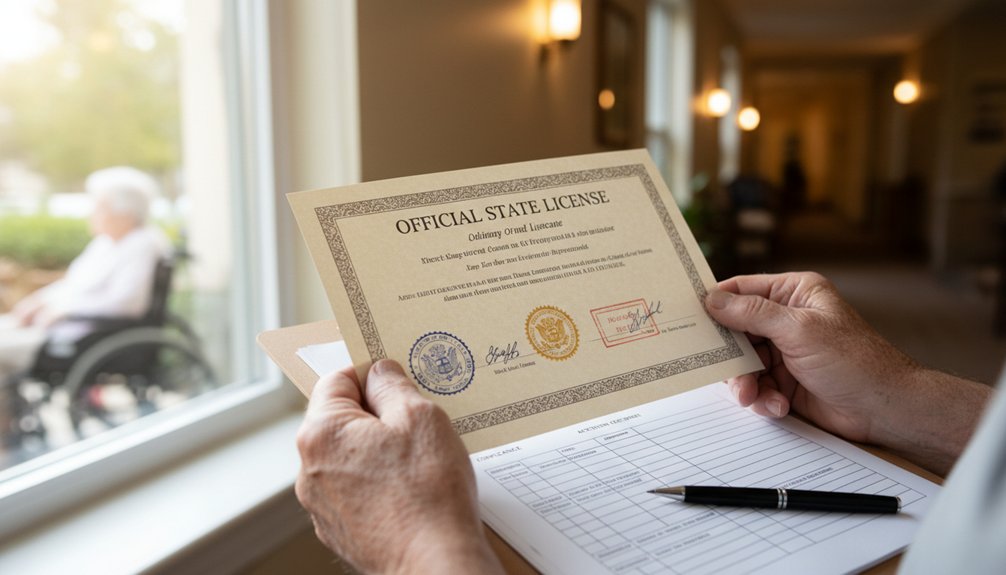
Checking a facility’s licensing and ratings is one of the most reliable ways to protect your loved one before signing anything. Unlike nursing homes, assisted living facilities fall under state-level regulation, so there’s no single national database to consult.
Each state runs its own licensing system, and many offer searchable online directories. Florida’s FloridaHealthFinder.gov, Washington’s DSHS Adult Family Home Locator, and Arizona’s DHS Assisted Living Facility Search are solid starting points if your facility is in those states. Texas, Virginia, and Oklahoma offer similar tools.
Start by entering the facility’s name or city into your state’s search form. Look for the license number, expiration date, inspection history, and any documented violations. Pay close attention to enforcement notices and complaint investigations. If you find past issues, check whether follow-up visits confirmed corrections. This research takes less than an hour and gives you a much clearer picture of what you’re choosing. Additionally, understanding VA benefits can help ease the financial burden of assisted living.
Not every state makes this easy — Massachusetts, for example, ranked 36th in accessibility and transparency, offering only downloadable lists with no online access to inspection reports.
What to Look for on Your First Facility Tour
Your first visit to an assisted living facility tells you more than any brochure or website ever could. Notice how the space feels when you walk in. Does a team member greet you warmly? Do you smell something pleasant rather than something clinical? These details matter.
Look for clean floors, soft colors, and home-like décor. Check whether staff call residents by name and interact with patience and genuine care. Watch residents’ faces—they should appear engaged, comfortable, and content, not isolated or distressed.
Examine the layout for safety features like handrails, nonslip flooring, color-coded wayfinders, and secure outdoor spaces. It’s also crucial to observe whether there are enhanced security measures specifically designed to prevent wandering and keep residents with Alzheimer’s or dementia safe. Ask to see a resident room. There should be room for personal photos, familiar furniture, and meaningful items. Emergency pull cords in bathrooms are a must.
Trust your instincts. If the environment feels peaceful and the staff seem genuinely invested in residents’ well-being, that’s a strong sign. Memory care communities also implement advanced technology like motion sensors to enhance safety and support residents’ independence.
Questions to Ask Every Memory Care Facility
Choosing a memory care facility requires a different set of questions than a standard assisted living search. You’ll want to ask specifically about dementia training, safety measures, and how staff personalize care for each resident.
Start with staff qualifications. Ask how many training hours staff receive, whether anyone holds a Certified Dementia Care Manager credential, and whether training includes housekeeping and food service workers.
Then ask about safety. Find out the staff-to-resident ratio during both day and night shifts, what physical safety features exist in rooms, and how staff handle aggressive or disruptive behaviors.
Ask how care plans are developed, who’s involved, and how often they’re reviewed. Facilities should update plans more frequently than every six months. Individual care plans should be reviewed every two to three months to reflect changes in the resident’s condition and needs.
Finally, ask about costs. Get clarity on what the monthly fee includes, how often prices increase, and how staff communicate changes in your loved one’s condition.
Red Flags That Disqualify a Memory Care Facility
Even after asking all the right questions, you’ll want to trust what you observe during your visit. Certain red flags should disqualify a facility immediately.
Watch for strong chemical odors masking underlying issues, poorly groomed residents, cluttered hallways, and visible bedsores. These signal neglect. Notice whether staff respond promptly to call lights, since slow responses often indicate dangerous understaffing. High staff turnover disrupts routines and increases infection risks, both serious concerns for memory care residents. Facilities focused on memory-related conditions often have lower staff turnover rates due to specialized training and consistent care.
Observe whether residents sit idle in wheelchairs most of the day with little social engagement or mentally stimulating activities. A facility that cares about residents invests in meaningful programming.
Check state inspection reports for unresolved violations, abuse flags, or complaints. Ask to see the Resident Bill of Rights and the facility’s state license. If staff deflect your questions, seem rude, or give vague answers, consider that a clear warning sign. Be aware that chemical restraints used to manage behavioral symptoms are prohibited by law and represent a serious violation of resident rights.
How to Compare Memory Care Facilities Side by Side
Once you’ve ruled out facilities with serious red flags, you can focus on comparing your remaining options in a more structured way. Start by evaluating staffing ratios. Facilities with one caregiver per four residents during peak hours can respond quickly and adapt care plans as needs change.
Next, look at environmental design. Secure, clearly marked spaces with memory aids like labeled cabinets and personalized memory walls help reduce confusion and support independence.
Then review the activity calendar. Strong programs blend art therapy, music reminiscence sessions, gentle exercise, and sensory activities into a consistent weekly routine that supports cognitive, physical, and emotional well-being.
Finally, consider the facility type itself. Dedicated memory care centers offer the highest specialization, while assisted living facilities with memory care wings integrate general daily support alongside cognitive-focused services. Comparing these factors side by side helps you identify which facility genuinely serves your loved one’s specific needs. It is also worth noting that Medicare does not cover long-term custodial care, so understanding each facility’s financial requirements and exploring Medicaid eligibility or long-term care insurance options is an essential part of making a sustainable choice.
How to Choose the Right Memory Care Facility for Your Family
Finding the right memory care facility starts with understanding your loved one’s specific needs and daily challenges. Consider whether they need help with dressing, bathing, or eating, and note any behaviors like wandering or agitation that require specialized staff training.
Next, match your loved one’s preferences to facility features. Look for amenities like specialized diets, accessible showers, and nonslip flooring that support both safety and comfort. A well-designed facility often includes state-of-the-art amenities that enhance the quality of life for residents.
Matching your loved one’s preferences to facility features ensures both safety and comfort in their daily life.
During tours, observe how staff interact with residents. Ask about caregiver-to-resident ratios and whether trained staff are available around the clock.
Review each facility’s care plans to confirm they’re personalized, not generic. Strong programs include cognitive therapies, music sessions, and outdoor spaces tailored to residents’ abilities.
Finally, trust what you observe. A clean, calm environment with engaged residents and attentive staff often signals a facility that genuinely prioritizes your loved one’s well-being. Memory care communities are specifically designed to provide 24/7 supervision to keep residents safe and prevent wandering.
Frequently Asked Questions
Can a Resident Move Between Memory Care and Assisted Living Levels?
Yes, you can move a resident from assisted living to memory care as cognitive needs increase, but the reverse is rare since dementia typically progresses. Some facilities offer shifting wings or continuing care communities, making internal moves easier. You’ll need a doctor’s evaluation, legal representative approval, and an updated care plan. Expect an adjustment period of several weeks during the shift.
What Happens if My Loved One’s Condition Worsens After Moving In?
If your loved one’s condition worsens, the facility can shift them to a higher level of care, like skilled nursing or memory care. This process typically requires a doctor’s evaluation and, for memory care moves, a legal representative’s agreement. Many facilities offer on-site options, so your loved one doesn’t need to relocate far. Monitor their progress closely, as repeated hospitalizations may require multiple shifts before stabilizing.
Are There Waitlists for Memory Care Facilities, and How Long?
Yes, waitlists are common, especially at top memory care communities. Average waits run 5 to 10 months at high-demand facilities, while Medicaid programs like California’s ALW and Texas’s STAR+PLUS Waiver show waits averaging 15 months in 2025. I’d recommend joining three or four waitlists early, paying any required fees to secure your spot, and staying in regular contact with each community while you wait.
Can Residents Personalize Their Rooms With Familiar Belongings and Furniture?
Yes, residents can personalize their rooms with familiar belongings and furniture. You can bring a favorite chair, family photos, a memory wall with mementos, or a quilt from home. Personal items reduce stress and support emotional well-being. However, you’ll need to respect community guidelines on wall colors and object placement, prioritize accessibility, and document any custom requests beyond the facility’s standard options.
How Do Facilities Handle Residents Who Refuse Care or Medications?
When a resident refuses care or medications, staff must document the refusal, noting the resident’s exact words and behavior. They’ll notify the physician and explore underlying causes, like pain or fear. Residents have the legal right to refuse treatment, so staff offer alternatives and involve the care team. Involuntary intervention only occurs when refusal creates an immediate safety risk.